
Indian benchmark indices Sensex and Nifty saw a significant rebound in early trade, driven by a sharp decline in crude oil prices and easing geopolitical tensions in the West Asia, which improved market sentiment and reduced inflation fears. Track Sensex, Nifty on July 27.

Analysts predict that the US-Iran geopolitical conflict, upcoming quarterly earnings announcements, and fluctuations in crude oil prices will be the primary drivers of investor sentiment in the Indian equity markets.

The highlight in January, with no surprise, has been flows into gold and silver ETFs.

Indian benchmark indices, Sensex and Nifty, closed higher, primarily driven by bank stocks and encouraging US inflation data, which fuelled expectations of a less aggressive Federal Reserve monetary policy. However, escalating US-Iran hostilities tempered investor sentiment, leading to some profit-taking.

'Banking is the only sector that can see double-digit growth in FY27.'

Indian benchmark indices, Sensex and Nifty, opened in positive territory, primarily driven by a strong performance in IT stocks, sustained foreign fund inflows, and a dip in global crude oil prices, despite a hawkish stance from the US Federal Reserve. Track Sensex, Nifty on July 30.

Indian benchmark indices, Sensex and Nifty, closed lower due to significant selling in HDFC Bank and Axis Bank shares, driven by margin-related concerns and escalating US-Iran tensions, which also pushed crude oil prices higher.

India is projected to attract between $80 and $85 billion through the Reserve Bank of India's (RBI) concessional swap facility, designed to boost foreign currency inflows, according to an SBI research report.

Indian benchmark stock indices Sensex and Nifty rebounded nearly 1 per cent, snapping a three-day decline, driven by rallies in Reliance Industries and Sun Pharma, alongside positive global market trends and easing geopolitical tensions.
Indian stock markets ended a five-day losing streak, with the Sensex surging 776 points and the Nifty gaining 228 points, driven by a significant drop in crude oil prices and easing geopolitical tensions in West Asia.

Several Indian real estate companies, including BPTP Ltd and Smartworld Developers, are rethinking or shelving their initial public offering (IPO) plans, which were expected to raise around 15,000 crore, due to weaker housing demand, higher costs, and a more cautious investment climate.

Indian benchmark indices, Sensex and Nifty, recorded their fifth consecutive day of losses, driven by investor caution over rising oil prices due to West Asia tensions and renewed concerns regarding US trade tariffs.
Indian benchmark indices, Sensex and Nifty, experienced a significant downturn as escalating tensions in West Asia led to a sharp surge in crude oil prices, coupled with fresh foreign fund outflows and a weakening rupee.

Indian benchmark indices Sensex and Nifty closed marginally lower due to profit-taking, following the Reserve Bank of India's decision to keep the repo rate unchanged while lowering its growth expectations for the current fiscal year and forecasting higher inflation.
Indian benchmark indices Sensex and Nifty saw a significant rebound in early trade, driven by softer-than-expected US inflation data which has reinforced expectations of a less aggressive monetary policy stance from the Federal Reserve, providing relief to global risk assets.
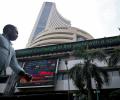
Indian benchmark indices, Sensex and Nifty, saw early gains, primarily driven by IT stocks, amidst expectations of a less aggressive monetary policy from the US Federal Reserve following softer inflation data. Global market trends and upcoming Q1 results are also influencing investor sentiment. Track Sensex, Nifty on july 16.

Indian benchmark indices, Sensex and Nifty, closed lower due to profit-taking after a four-day rally, influenced by weakness in Asian markets, with Trent shares tumbling over 12 per cent.

Indian benchmark indices, Sensex and Nifty, staged a moderate rebound after a significant correction in the previous session, driven by foreign fund inflows and a largely positive trend in global markets, though geopolitical tensions between the US and Iran continued to foster caution.
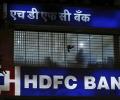
HDFC Bank shares plummeted over 5 per cent, wiping out Rs 64,685 crore from its market valuation, after its June quarter earnings disappointed investors, particularly on the net interest margin (NIM) front.

A sophisticated cross-bank syndicate is systematically defrauding non-resident Indians (NRIs) and elderly citizens by exploiting their fixed deposits through forged documents and fictitious loans, often involving colluding bank employees and real estate deals.

The initial public offer (IPO) of SBI Funds Management Ltd was fully subscribed on the second day of bidding, receiving bids for 1.17 times the shares on offer, with strong interest from non-institutional investors and anchor investors.

Analysts predict that the ongoing conflict in West Asia, crude oil price fluctuations, and the US Federal Reserve's interest rate decision will significantly influence the Indian equity market this week.
Indian benchmark indices, Sensex and Nifty, bounced back significantly after two days of losses, with the Sensex climbing 443.97 points to settle at 76,922.64, driven by positive global market trends and a drop in crude oil prices.

Indian pharmaceutical companies are not rushing to relocate manufacturing to the United States despite former President Donald Trump's renewed threat of tariffs up to 200 per cent on imported generic drugs. Instead, they are leveraging existing US plants, contract manufacturers, and making selective investments in complex products while maintaining India as their primary production hub.

Verify a content creator's Sebi registration, qualifications and certifications before acting on their advice.
Indian benchmark equity indices, Sensex and Nifty, extended their winning streak for a third consecutive day, driven by a rally in IT stocks and global cues suggesting a more accommodative monetary policy after softer-than-expected US jobs data.

SBI Funds Management, India's largest asset management company, has set its IPO price band between 545 and Rs 574 per share, valuing the company at 1.2 trillion. The management explained the 'moderate' valuation aims to instil investor confidence amidst market uncertainty, while also highlighting plans for AI integration, expansion into GIFT City, and new alternative investment funds.

In response to the NEET-UG 2026 paper leak controversy, the NTA has initiated a significant security upgrade, floating a Rs 7.5 crore tender for comprehensive, round-the-clock security services to protect its critical infrastructure and confidential examination materials.

Brokerages are forecasting a strong first quarter (April-June/Q1) for Reliance Industries Ltd (RIL) in FY2026-27, with double-digit revenue growth, Ebitda increases of around 12 per cent, and net profit rising up to 10 per cent, primarily driven by its oil-to-chemicals (O2C), retail, and Jio businesses.
Indian benchmark indices Sensex and Nifty extended their winning streak to a fourth consecutive day, driven by strong buying in blue-chip bank stocks and a decline in global crude oil prices. Fresh foreign fund inflows also contributed to the optimistic sentiment in the domestic equity market.
Indian stock markets witnessed a significant rally, with the Sensex climbing 964.58 points and the Nifty reaching 24,330, driven by strong buying in blue-chip stocks, particularly in the IT and banking sectors, amidst optimism over Q1 earnings and a shift towards large-cap investments.

IT stocks had their worst first half fall in decades, with the Nifty IT index declining 31% in the January-June 2026 period, its biggest decline in the first six months of a calendar year since 2003.
Indian equity benchmark indices Sensex and Nifty closed lower on Thursday, driven by escalating tensions between the US and Iran, persistent foreign fund outflows, and concerns over rising US inflation.

Maruti Suzuki, India's leading passenger vehicle manufacturer, is experiencing robust growth in the June quarter, driven by a recovery in the entry-level segment, easing supply constraints, and significant market share gains. Despite potential headwinds from El Nio, analysts remain optimistic about the company's future performance.
Indian benchmark indices, Sensex and Nifty, rebounded in early trade after two days of decline, driven by positive global market trends and strong buying in auto stocks. This recovery follows a robust performance in US markets and a rally in Asian markets, particularly Japan's Nikkei, fueled by AI-driven technology optimism. Track Sensex, Nifty on July 1.
Smallcap funds give investors access to businesses that can grow much faster than the broader economy.

Indian benchmark equity indices, Sensex and Nifty, extended their rally for a fifth consecutive session, driven by optimism surrounding a potential US-Iran peace deal and a significant drop in crude oil prices. Despite hawkish remarks from the US Fed, investors remain hopeful that easing energy prices could temper inflationary pressures.

The Indian equity market is set for an event-heavy week, with analysts pointing to the Reserve Bank of India's (RBI) interest rate decision, developments in the US-Iran situation, and crude oil prices as the primary determinants of market trends.
Analysts predict continued volatility in Indian equity markets due to domestic macroeconomic data, F&O expiry, global developments including US tariff policies, and geopolitical tensions.

Indian benchmark indices Sensex and Nifty rebounded in early trade, tracking a recovery in global equity markets and an easing of hostilities between Israel and Iran, after a sharp fall in the previous session.
